

CELEBRATING BRIGID: A feast for Ireland’s mythic saint of spring
Updated: May 4
Imbolc festivities for St. Brigid, an ancient feminist icon

By CINDA CHAVICH
In the spirit of mid-winter Celtic feast of Imbolc or St. Brigid’s Feast of Fire, I’m thinking about the earliest spring foods right now.
St. Brigid’s Day is Feb. 1 — halfway between the Winter Solstice and the Spring Equinox, when the Irish goddess and saint, Brigid, is celebrated with fire rituals (lighting candles and bonfires) and symbolic foods marking the fertility of the earth as winter turns to spring.

It's a time when days lengthen and gardeners start planning which seeds to start in the greenhouse, and when the first spring plants emerge in the wild. Like Groundhog Day (Feb. 2, which is also part of the Imbolc celebration) it’s a time to start looking forward to the end of winter.
St. Brigid’s Day which coincides with Imbolic is also a new national holiday in Ireland, declared in 2023 after a campaign launched by Herstory in 2019, to honour the country’s “Matron Saint” with a Festival of Light. It’s become a day to celebrate the power of women, and channel hope and resilience.
So I am keen to join their ranks and learn more about Brigid.
WHO WAS BRIGID?

Beyond a rich and mythical folklore, there’s little historical documentation of Brigid's life, but scholars now believe she lived in the 5th century, a time when Ireland’s agrarian life centered around the rhythm of the seasons, farming and foraging from the land. In the Gaelic tradition, Brigid is known as the spring goddess of fertility and fire, but also of poetry, craft, blacksmithing, healing, hearth and home, domestic animals and brewing. So that has most of the culinary bases covered!
Still, I'm wondering what kind of food I should serve to properly honour this legandary healer and nun, known for her "helping miracles" and elevated to sainthood after her death in 524.
FRESH BREAD AND BUTTER, HONEY AND SEEDS
According to my research, seeds are symbolic for this festive feast, so think about recipes with seeds, from lemon poppyseed muffins to seedy granola. Ancient grains like oats and barley are traditionally baked into round cakes, breads or bannock, representing the power of the sun, using seasonal foods including fresh butter, milk, eggs and golden honey.
I defer to the expertise of local writer and wildcrafter Danielle Prohom Olson and her deep dives into all things ancestral at Gather Victoria, her website loaded with beautiful stories, photos and recipes celebrating ancient feasts and traditions around the cycles of the seasons, focussed on her deep knowledge of foraged foods, herbal remedies and food lore. Imbolc is just one area of Goddess Cuisine she explores at Gather Victoria.
“Honey was golden and filled with the power of the sun, and was always included with fresh bread and butter on the Imbolc table,” she writes. “Seeded cakes, bread, and buns were also on the Imbolc menu as seeds symbolized the growth of new life.”
As the healer, St. Brigid relied on herbal remedies and plants ranging from heather and sage to chamomile and rosemary, and since this ancient celebration coincides with the emergence of young edible shoots and wild plants, these are also interesting ingredients for an Imbolc meal.
SCROLL DOWN FOR BRIGID'S DAY FEAST RECIPES:
Colcannon
Potato Farls
Wilted Wild Greens with Rice
Boozy Bread Pudding with Whiskey Sauce
Never Fail Honey Cake
Granny Susan's Soda Bread
MID WINTER FOOD TO FORAGE
Which brings me to what we can find here on Vancouver Island to add to our mid-winter menus — as days lengthen and the earth stirs, there are lots of wild edibles to discover in local fields and forests around Victoria.
On a recent edible plant walk with Metchosin chef Tom Kral (Nature’s Chef), we learned about foraging for early spring greens — the chickweed, dandelions, sheep sorrel, winter cress and nettles, both the stinging kind and the benign dead nettles, that were carpeting the grassy slopes at historic Madrona Farm, in the urban Blenkinsop Valley.


Kral pointed out the edible shoots of cattails — with their cucumber and melon flavors — clumps of tender young plantain leaves, and “superfood” dandelions, beloved for their serrated leaves, sunny yellow flowers and roastable roots. He told us about the citrusy grapefruit and lime notes in Douglas Fir needles, the resins “to extract into vinegar or honey,” and had us fill baskets with cleavers, dead nettles and chickweed for a dinner we’d enjoy later at The Courtney Room.
Kral recommends adding nutritious young weeds to salads, whirling them up into green smoothies and making wild pestos.

“Eat wild greens and weeds like lettuce in salads or make pesto,” he said. “Pesto is a good way because you can harvest a basket today and make pesto, and it will last a week in the fridge. Then you can just put it on your pizza or your pasta or make salad dressing.”
Kral offers regular foraging walks, private wildcrafted dinners and even one-on-one Wild Foods Education, all from his rural Metchosin home.

Our foraging outing and dinner was part of Destination Victoria’s recent celebration of healthy living and wellness in the city, and we enjoyed dishes from Kral and Courtney Room chef Graeme Parker ranging from fresh BC oysters with cleavers-infused vinegar to Wagyu Bavette with a salal berry jus and a stack of fat pommes frites dusted with porcini powder.
There was a warm oyster mushroom tart, topped with a tasty gouda foam, and Parker’s pillowy potato gnocchi bathed in an uni emulsion, the creamy roe of the wild red and green sea urchin that Kral had pulled from local waters. Even dessert came with inspirational flavours from the forest — an orange sponge Swiss roll filled with a creamy mousse flavoured with sweet liquorice fern root, alongside a scoop of spruce sorbet.

It was a meal from the forest and the sea — “using what nature provides” — said Kral, adding that foraging, even introducing wild edible species into your lawn and garden, helps to “steward the land and take care of the earth.”
THE BRIGID'S DAY FEAST
So what to serve to mark St. Brigid’s feast of light this weekend?

All things Irish come to mind. I’m thinking maybe a creamy wild onion (or leek) and potato soup, along with some classic Irish soda bread, dusted with seeds and served with a good slab of fresh butter from a local creamery.
Or perhaps we could have that comforting Irish mash, Colcannon, with tender cabbage, potatoes and any wild greens/edible weeds I can find in the winter garden.
Nettles and other wild greens could be at the centre of an Imbolc feast, too — whether classic Nettle Soup or spanakopita pie, filled with the many wild greens (horta), traditionally gathered in spring in the Greek countryside. One of my favourite recipes, for wild greens and rice, might fit the bill to celebrate the first growth of spring.
Brigid is associated with spring flowers like snowdrops, used in traditional medicine, and sunny, edible dandelions which can be infused in fermented beverages, or battered and fried for fritters.

As Prodom Olson notes, blackberries were “sacred to Brigid,” so I may pull a bag of my foraged wild Himalayan blackberries from the freezer for dessert, too. Prohom Olson made a St. Brigid's bread pudding with blackberries and whisky custard, and I’m sure to find something similar in my own recipe bank. Or perhaps its time to make a classic honey cake, something I also identify with spring.
There’s a bit of Irish in me, so I’ll channel the spirit of my late grandmother — Mary Ellen (May) Connelly — in our Imbolc meal, and think kindly about green hills of that ancient emerald isle, so reminiscent of my coastal island home.

CELEBRATING ST. BRIGID


If you happen to be in County Kildare, in eastern Ireland, on Feb. 1, you can celebrate St. Brigid with the locals. Children and families gather reeds to weave the St. Brigid’s Cross, a symbol to hang in the home to summon the pagan goddess of healing and protection. You can visit the matron saint’s sacred sites on pilgrimage walks, attend festivals that celebrate her legacy of peace and modern feminism though storytelling, concerts, dance, talks and fire shows, or simply gaze upon her stained glass portrait in the historic Kildare Cathedral, on the site where Brigid founded a nunnery and church in the 5th Century.


WHAT ARE ST. BRIGID'S DAY LEGENDS?
The folklore and legends surrounding Brigid are many.
She turned water into beer to slake the thirst of multitudes, and when she shared the last of her butter with a needy woman, her supply was magically restored to share again. She was known to rescue and cure domestic animals, kept demons and danger at bay with her blessings, and could command the elements of wind and rain. Like her Celtic goddess namesake, St. Brigid is aligned with the spring rebirth of the land. One of Ireland's three patron saints, her legends and stories overlap with Celtic mythology, and today she's a symbol of feminist strength and wisdom. .
Christianity and folklore meet on the eve of St. Brigid's Feast Day (Feb. 1) with the tradition of “Bratóg Bhríde”, also known as St. Brigid’s magical cloak. It's still common to set a scarf or cloth outside the house on St. Brigid’s eve, to be blessed by the wandering goddess as she passes by in the night — a garment that will be infused with her power to cure illness and offer protection from dangers for those who wear it.

WHERE IS ST. BRIGID'S ORIGINAL CHURCH?
The wooden church/nunnery she built in Kildare from local oak is now the site of the cathedral that bears her name, and the modern Solas Bhride centre, opened in 2015, welcomes all to be inspired by St. Brigid’s spiritual legacy, some 1500 years later.
This year, their 33rd Feile Bride is focused on the global Pause for Peace movement, and how she stood for justice for the poor, peace and caring for the land, a message so vital in today's world.

Though some debate whether Brigid was a real person or simply a fictional pagan goddess, “Christianized” by the Church to supplant midwinter Imbolc rituals, her mythical presence lives on. The name Brigit/Brigid comes from the old Irish “brigh” meaning “strong and protective woman”.
No wonder Brigid remains a spiritual and feminist icon for the world.

RECIPES FOR A ST. BRIGID'S DAY FEAST:
COLCANNON
Cabbage and potatoes — like peas and carrots — are perfect partners. This is a classic peasant dish from the Celts — a mash of potatoes, onions, parsnips, and cabbage truly exceeds the sum of its parts. With the addition of a little butter and cream, it’s a winter feast on its own, or perfect as a side dish for tender braised lamb shanks or pot roasted beef.

6 medium potatoes, peeled and quartered
1 large onion, finely chopped
1 cup (250 mL) peeled and chopped parsnips
3 cups (750 mL) finely shredded or chopped
green cabbage or Brussels sprouts
2 cups (500 mL) water
1 tsp (5 mL) salt
freshly ground black pepper
1/4 cup (60 mL) butter (plus extra for serving)
¼ cup (60 mL) whipping cream
In a large, heavy saucepan, layer the vegetables— half of the potatoes, onions, parsnips, and cabbage — then repeat. Add the salt to the water, and pour it over top.
Cover the pan and bring to a boil over medium-high heat. Reduce the heat to low, and simmer, covered, for 1 hour.
Drain (reserving the liquid) and use a potato masher to mash everything together until smooth.
Season with salt and pepper and mix in the butter and cream while hot.
Serve colcannon as they do in Ireland, with each serving topped with a generous knob of butter.
NOTE: The reserved cooking liquid is delicious to sip hot or to use as a base for soups.
POTATO FARLS
This flat griddle bread is made with mashed potatoes and served with eggs for breakfast (for a classic "Ulster Fry" or as a base for Eggs Benedict), with soup for lunch, or simply to enjoy warm with butter. Try farls (a.k.a. fadge) instead of naan bread with curry or stews, perfect to soak up anything its served alongside. Nothing could be easier or more delicious — and a great way to recycle your leftover mash.
1 pound of floury potatoes (i.e. Russet)
salt
3 Tbsp melted butter
¼-1/3 cup flour
½ tsp baking powder
milk (optional)
salt and pepper to taste
chopped chives (optional)
In a large pot of boiling, salted water, boil the potatoes until tender. Drain well and return to pot, over heat, to dry the potatoes for a minute. Mash or put through a ricer and stir in the melted butter.
Combine the flour and baking powder, and add to the potatoes. Mix to form a soft (but not sticky) dough. If it's too wet, add a little more flour, if too dry, stir in a splash of milk. Season with salt and pepper to taste (and add optional chopped chives).
Divide the dough in half and form each piece into a ball. Roll the ball into a round, about ¼-1/2 inch thick, on a floured surface, and cut into quarters.
Heat a large griddle or heavy pan over medium high heat. Brush the pan lightly with a butter and cook the farls for about 3-4 minutes per side, until golden brown and baked through.
Makes 8 pieces.
WILTED WILD SPRING GREENS WITH RICE
I learned to make this delicious vegetarian dish while dining at a nunnery in Greece. Greeks bake wild spring greens into spanikopita and other traditional dishes, but this tasty combination of rice with healthy greens, olive oil and lemon juice may be the secret to their longevity. Use spinach or any mix of wild or cultivated greens in this dish – dandelions, sorrel and mustard, to complement the spinach. It’s a popular “Lenten” dish in Greece, but a great way to “get your greens” all year round.
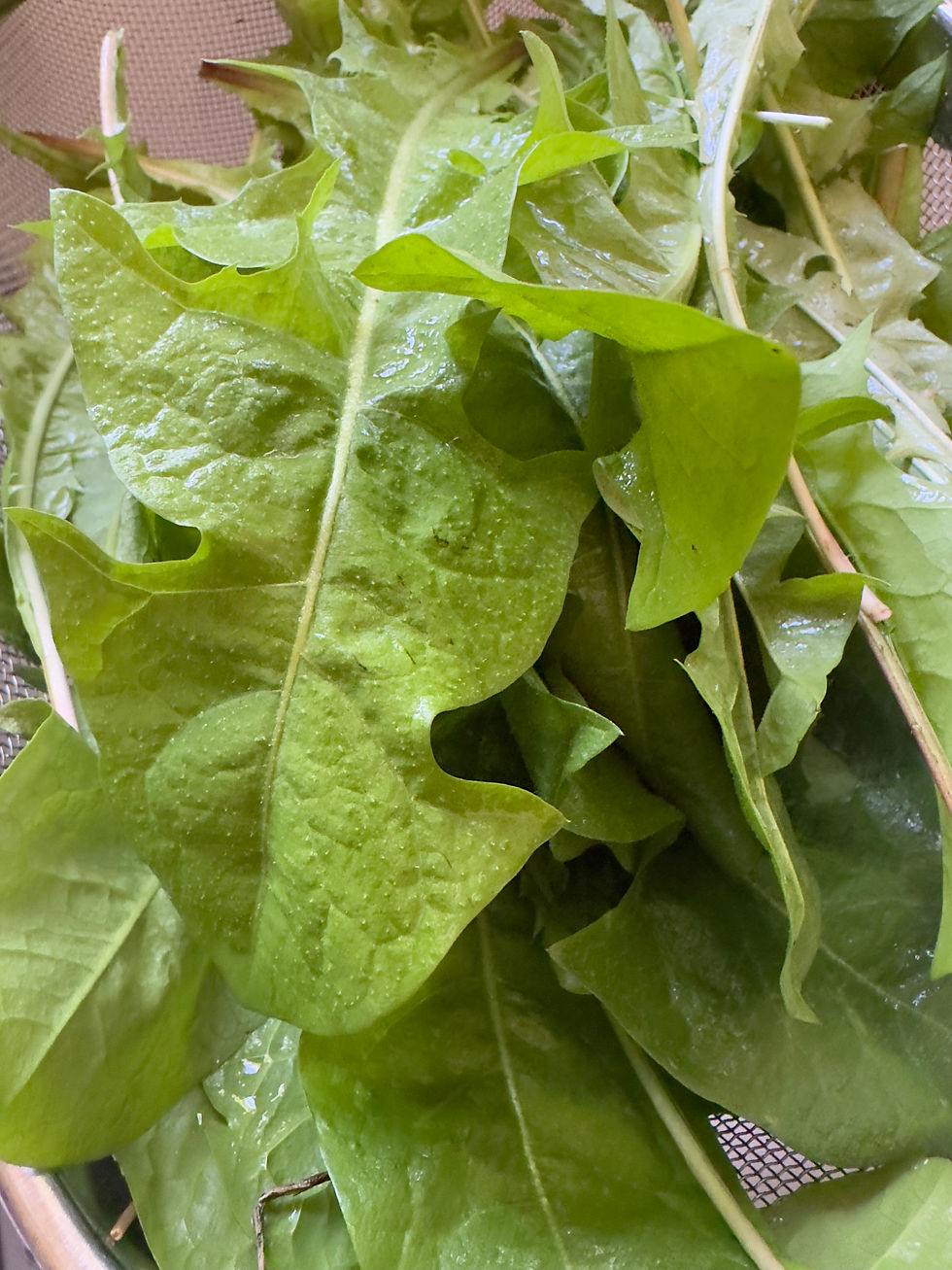
2 pounds (500 g) fresh spinach (or a mix of greens including chard, beet greens, dandelion greens, mustard greens, sorrel, nettles, arugula, etc.)
1/2 cup (125 mL) extra virgin Greek olive oil
2 onions, minced
3 cloves garlic, minced
1 cup basmati (250 mL) or other long grain rice
1 cup (250 mL) water or vegetable broth
1/4 cup (50 mL) minced fresh dill, divided
juice of 1 lemon
salt and freshly ground black pepper
pinch crushed red chili peppers
Optional garnish: lemon slices, olives and crumbled feta
Wash the greens well and remove any tough stems. Shred the spinach/greens and set aside.
Heat the olive oil in a heavy, deep pot and cook the onion over medium heat until translucent. Add the garlic and cook for 1 minute longer, being careful not to burn the garlic.
Add the rice and stir to coat the grains with oil. Cook for 2 minutes. Add the greens and stir to combine. When the greens begin to wilt and cook down, add the water or broth and half the dill. Bring to a boil, reduce the heat to low and cover. Steam until all the liquid is absorbed, about 20 minutes, adding a little more water if necessary. Stir in the lemon juice and remaining dill. Season with salt, pepper and crushed chilies to taste.
Drizzle with a little more olive oil before serving, and garnish with lemon slices, olives and crumbled feta, if desired. Serves 4–6.
BOOZY BREAD PUDDING WITH WHISKEY SAUCE
In Ireland, their Irish whiskey (spelled with an “e”) is triple distilled for a very smooth finish. Great to drink or tip into the creamy sauce for this classic bread pudding, that's perfect to finish a Celtic feast. To give this pudding a wild, St. Brigid's twist, replace the raisins in this recipe with wild blackberries (fresh in summer but from the freezer in mid-winter).

6 cups (1.5 L) day-old white bread cubes
(French, Italian or richer challah/egg bread)
1 cup (250 mL) raisins (or wild blackberries)
½ cup (125 mL) Irish whiskey or Canadian rye
2 cups (500 mL) whole milk
1 cup (250 mL) whipping cream
4 eggs, lightly beaten
½ cup (125 mL) packed brown sugar
½ cup (125 mL) melted unsalted butter
2 tsp (10 mL) pure vanilla extract
½ tsp (2 mL) salt
Caramel Whiskey Sauce:
one 14-oz (398-mL) can sweetened condensed milk
½ cup (125 mL) whipping cream
¼ cup (60 mL) Irish whiskey or Canadian rye
Preheat the oven to 350°F (180°C).
Cut the bread into 6-inch (2-cm) cubes and place in a large bowl.
Combine the raisins and whiskey in a bowl and microwave for 1 minute. Set aside to cool and macerate for 30 minutes. Skip this step if you're using wild blackberries.
In another bowl, use a whisk to combine the milk, cream, egg, sugar, butter, vanilla, and salt. Pour over the bread and stir to combine. Let the mixture rest for 10 minutes, so that the bread soaks up the custard, then fold in the raisins (or frozen blackberries) and whiskey.
Pour all into a buttered, 10-cup (2.5-L) baking dish. Cover and chill overnight, or bake immediately. Bake the pudding at 350°F (180°C) for 1 hour or until puffed and golden.
While the pudding is baking, make the sauce. In a small saucepan, boil the sweetened condensed milk with the cream over medium heat until it turns a nice caramel color. This will take about 15 minutes. Stir the mixture frequently to make sure it doesn’t burn on the bottom. Remove from the heat and slowly stir in the whisky. Keep warm until ready to use.
Cool the pudding slightly before cutting into squares. You can also chill the pudding, cut into squares and reheat in the microwave before serving.
Serve the pudding warm, drizzled with whiskey sauce. Serves 8 to 10.
NEVER FAIL HONEY CAKE (MEDIVNYK)
Honey Cake (Medivnyk) is a Ukrainian recipe, and this one is from the iconic culinary bible, Traditional Ukrainian Cooking by Savella Stechishin, published in Canada in 1957. I used a silicone bundt pan — you can see how beautifully it turned out! We serve honey cake for Easter celebrations but it's perfect to share on St. Brigid's Feast Day, too!

1 cup honey
3 cups sifted flour
1 teaspoon baking soda
1 teaspoon baking powder
1 teaspoon cinnamon
1/4 teaspoon salt
1/2 cup strong cool coffee
Grated rind and juice of 1 orange
1 teaspoon vanilla
2 tablespoons butter
1 cup sugar
4 eggs, separated
1 cup chopped walnuts
Bring the honey to a boil and then cool it. Sift the flour with the dry ingredients twice. Combine the coffee with the grated rind, orange juice and vanilla. Cream the butter with the sugar. Mix in the honey. Beat the egg yolks until light and blend with the honey mixture. Add the flour, alternatively with the coffee. Stir in the nuts. Beat the egg whites until stiff and fold into the batter. Spoon into a buttered baking pan. Bake in a moderate oven (325 F) for about 50 minutes, or until done when tested (use a skewer to check). Remove the cake from the pan and place it on a cake rack to cool.
Honey cake is best if given a couple of days to "ripen" after baking. Then share it!

GRANNY SUSAN’S SODA BREAD
I learned how to stir up this quick soda bread at Bronagh Duffin’s BakeHouse Cookery School in Northern Ireland, where she shares her Granny Susan’s Soda Bread recipe. If you don’t have buttermilk on hand, just add a squeeze of fresh lemon juice to fresh milk and it will be perfectly acidic enough to react with the baking soda to make this bread. For St. Brigid, try using 1 1/2 cups flour and 1 cup of oat flour (rolled oats whirled in the blender until fine) and sprinkle the bread with rolled oats or seeds before baking.
Enjoy it warm from the oven, with lots of fresh local butter

2 1/2 cups flour (or 1 1/2 cups flour and 1 cup oat flour)
1/2 tsp salt
1/2 tsp baking soda
200 mL (3/4 cup) buttermilk
In a bowl, combine the flour, salt and soda. Stir in 2/3 of the buttermilk and stir until you have a “shaggy” mixture. Add more buttermilk, kneading the dough in the bowl, to form a soft dough.
Form into a ball and set on a baking sheet that’s been lined with parchment paper. Using a sharp knife, slash a cross into the top of the bread (“to let the fairies out”), then bake in a preheated 230 C (450 F) oven for 15 minutes. Reduce heat to 200 C (400 F) and bake 20-30 minutes longer, until loaf is golden brown.


Comments