

WEDDING TRADITIONS: Families prepare special foods to tie the knot
I talked to Victoria chefs — with family roots from Ghana and Mexico, to Thailand and India’s Malabar Coast — about their wedding feasts
By CINDA CHAVICH
May 1, 2026
If you grew up on the prairies like I did, weddings were community affairs — a ceremony in the local church followed by a luncheon or dinner in the church hall. The local “church ladies” were the go-to caterers, turning out fancy little sandwiches and squares, roast beef or turkey dinners with home-baked pies, and that prairie staple, perogies, served for midnight lunch as the party wound down.

Volunteer United Church Women (UCW) or Catholic Women’s League (CWL) cooks were often joined by the couple’s friends and family in the kitchen, making every wedding a true community event. Long before wedding receptions featured chef’s stations, seafood towers, or slider bars, aunties and grandmothers gathered to pinch perogies, fold Chinese dumplings, fill tortellini and tiny wontons, and wrap tamales in corn husks or dolmades in grape leaves.
These communal work bees — where many hands make light work — still precede big family celebrations in cultural communities across the country. At the Ukrainian Cultural Centre in Victoria, volunteers tend steamy pots of boiling potatoes and cut sheets of rolled dough into rounds, ready for filling and folding at regular perogy-making bees.

Sitting together to chat and work, floury fingers pinch thousands of perogies for monthly Ukrainian dinners, fundraisers, and the weddings often held in the centre’s cosy hall. Volunteers also gather to make cabbage rolls and intricately layered honey cakes, which are popular for wedding celebrations.
“They are here on Saturdays, working together, to make 5,000 perogies every month,” says Svitlana Burlaka, pulling a bag of tender potato-and-cheese perogies from the freezer in the small gift shop —
proof that these communal traditions are still very much alive.
Thai Traditions
That “dumpling” vibe crosses cultures — it’s the kind of fiddly food that’s difficult for one cook to manage, but joyful when many hands come together.
The collective effort and multi-generational collaboration spreads the love, and it’s how Tarn Tayanuth launched her business, Dumpling Drop, making pork and chive Thai dumplings with her mother, Toom, who was living with Alzheimer’s disease.

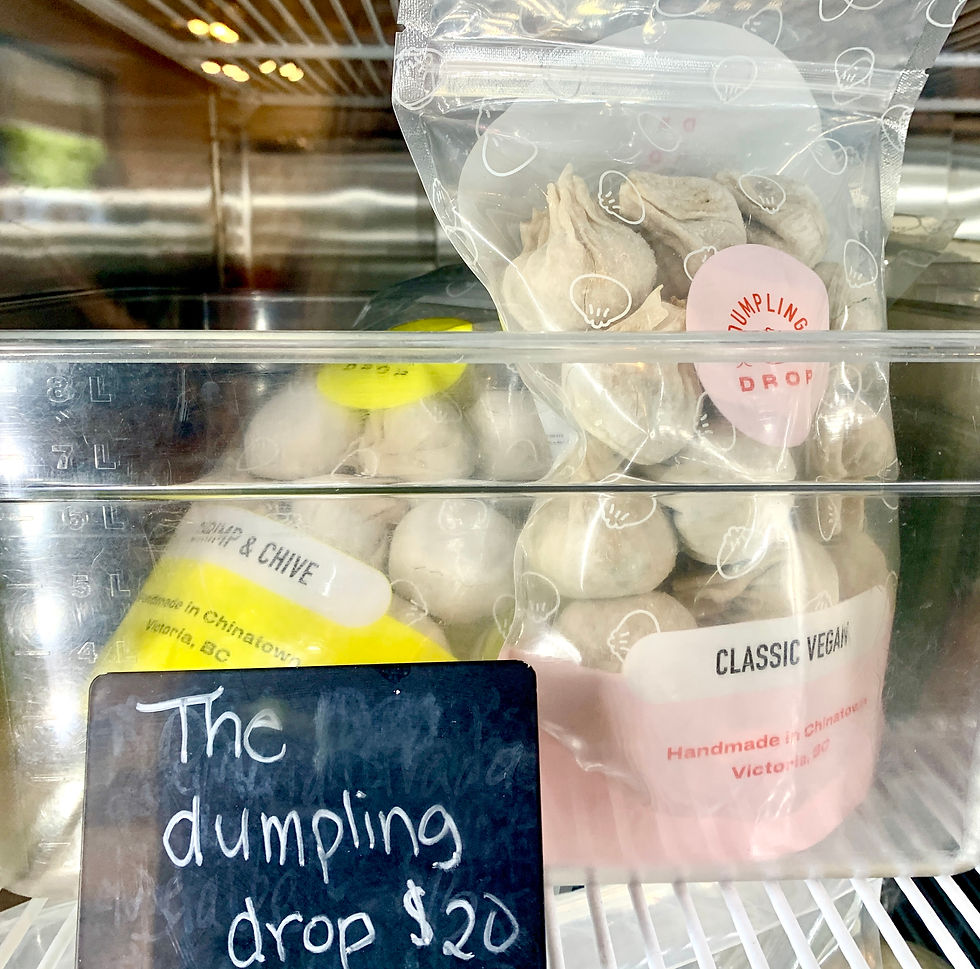
Cooking together offered them both connection and purpose. And while Dumpling Drop has grown far beyond those early weekly mother-and-daughter dumpling-making sessions, the dumplings are still rolled by hand by a lively team of “Thai aunties and Thai students,” who gather daily to work, socialize, and turn out some 2,000–3,000 dumplings each day.
“Everyone is speaking Thai, yapping away and rolling dumplings — it creates such a community,” says Tayanuth.
From dumplings filled with pork belly, mushrooms, and chives to vegan versions and dumplings made with shrimp or lemongrass chicken, there are many options to enjoy at her Chinatown restaurant or to take home frozen and cook later. But beyond the business itself, Tayanuth says ritual and symbolism remain central to weddings in Thailand.

Thai weddings begin with a dowry ceremony, traditionally meant to preserve a daughter’s social and financial status, which includes a lively procession to the bride’s home where the groom offers symbolic gifts — betel nuts, flowers, rice, and cash. On the wedding day, morning blessings are offered by nine Buddhist monks, who are fed first, because “nine is a great number in Thailand, tied to a bright future,” Tayanuth says.
The wedding feast that follows is generous: a whole pig, plenty of rice and curries, and enough food to feed the entire village.
“It’s all about gathering, coming together and showing some love and support,” says Tayanuth. “The bigger the better.”
African Traditions

Like the colourful patterns woven into traditional kente cloth, a marriage in Ghana is more than a party — it’s a vibrant celebration that marks the joining of extended families and communities.
Giant cauldrons of spicy jollof rice with chicken stew and sugar-dusted bofrot doughnuts are part of the feast, but before any food is shared, there are serious negotiations: a face-to-face meeting of families to determine whether they agree to the match.
“While food is huge at weddings, the celebration of family coming together is the main event,” says Chef Castro
Boateng, whose roots lie in Ghana. “The most important part is asking the parents if you can marry their daughter, and there’s a big focus on what the bride’s family should receive from the groom and his family.” This pre-wedding ritual — often called the “knocking” ceremony — formalizes the union long before invitations are sent.
Boateng and his wife, Charlotte, chose not to follow this tradition (“I just asked her dad,” he quips), but he recalls the formality surrounding family weddings in Ghana.
“All my family comes to her house, and we sit on each side of the room, while the groom formally asks,” he says. “It’s a kind of negotiation, to prove that he can look after their daughter.”
Gifts may range from elaborately handwoven kente cloth and gold jewellery to more practical offerings — sometimes even a cow or a goat — provided to the bride’s family as a means of ensuring their future prosperity.

As in many cultures, it’s the aunts and sisters of the bride who gather to prepare the food for these celebrations, cooking communally with an eye toward abundance and hospitality. These pre-wedding gatherings are about more than sustenance — they’re a chance to celebrate together before the formal “white wedding” that many modern couples now choose.
Those later celebrations are often massive affairs, Boateng says, with hundreds of guests and a definition of “family” that extends far beyond blood relations.
“Jollof rice is a must-have at any wedding in Ghana,” he says. Stirred together in a single pot, it represents unity and joy and is always the centrepiece of the meal.

At his House of Boateng Café, Boateng serves jollof with eggs and housemade shito pepper sauce. For weddings and traditional African dinners, he also prepares spicy kelewele (crisp fried plantain), waakye (rice and black-eyed peas), Red Red bean stew, and chichinga beef kebabs, aromatically spiced with ginger, cayenne, nutmeg, and cinnamon, then charred on the grill. “It’s not fancy food — just good Ghanaian home cooking — but jollof rice is above and beyond everything.”

Community First
The idea of marriage as a blending of families and communities is woven into cultural traditions around the world. In Mexico, that union is embodied in the long, collaborative process of making a wedding mole — a dish that begins not with a single cook, but with ingredients and labour contributed by many.

Though served simply over braised chicken or turkey with rice, mole is a dark, complex sauce that requires time, patience, and precise steps, says Israel Alvarez Molina, chef-owner of MAiiZ Nixtamal. At his restaurant, Molina makes two distinctive moles, including his own black mole and another infused with plums and Szechuan peppercorns for duck confit carnitas.

But the Wedding Mole from Oaxaca, he says, is traditionally a mole negra, considered “wedding food of honour.”
“All the friends and family get together and contribute — this one has the spices, this one brings the tomatoes, the cacao or the chilies — and they cook the mole for two or three days,” says Molina. “Women gather to toast the chilies and grind the spices, and both families contribute ingredients for the mole.”
The symbolism is explicit: the work is shared long before the meal is served.
That meaning continues at the table.
“The bride and groom taste the mole first, symbolizing they will share life’s sweetness, bitterness and effort,” Molina says. “Mole becomes a metaphor for the marriage.”

Every region has its own traditional version, each layered with flavour—from white moles made with plantains, raisins, and sweet spices to dark, smoky sauces “cooked in huge cazos [large cooking pots] over wood fires.”
“If the mole is sweet, the marriage will be sweet; if it’s spicy, it means passion and fire,” says Molina.
Either way, mole is essential at a wedding where the entire community is invited to celebrate.
“Mexican families make mole for special occasions, and when we do, we don’t only make a little pot—we make a lot.”
Kerala Feasting
You may never make it to a wedding on India’s southern coast, but the Onam Sadhya feast — served to celebrate the harvest at Café Malabar — offers a close approximation of the food traditions you’d experience at a Keralan wedding. It’s a meal designed for sharing, abundance, and ritual, with every element carrying meaning.

Tables are set with large banana leaf “plates”— a biodegradable, sustainable setting — while diners use their hands to scoop up fragrant rice and an array of vegetable, lentil, and bean curries, along with pickles and spicy sauces. It’s an abundant, interactive feast that engages all the senses. Traditionally, each dish is placed in a specific order on the banana leaf, with anywhere from 25 to 50 curries, sambals, and pickles presented, and flavours ranging from sweet and sour to salty, bitter, pungent, and astringent.
Matta rice, a chewy red rice from Kerala, anchors the meal, but coconut is king — essential to lentil parippu curry, cabbage thoran with freshly grated coconut, creamy coconut–curry leaf sauces for vegetables, and sweet moong payasam.
“All the men help in cutting coconuts, grating coconuts and squeezing out the coconut milk,” says Café Malabar’s co-owner Chef Kiran Kolathodan, recalling the family weddings of his youth. “Cooks come from different parts of the region, and everyone pitches in to cut carrots and plantain and wild yam for the sambal. It’s a huge community event.”

Depending on the family and region, the Sadhya may be completely vegetarian or include fish dishes, chicken curries, and meat, Kolathodan says. In Muslim families, wedding feasts often feature massive beef or goat biryanis meant for sharing.
“Whoever is the eldest in the family is in charge of serving,” he adds, with men and boys helping deliver each hot dish to guests and place it on the banana leaf, as they do when serving a Sadhya feast in the restaurant. Toddy, the local fermented palm wine — “for the grandmothers,” Kolathodan jokes — helps fuel the celebration.
Café Malabar’s business partner, Chef Karma Tenpa, whose roots lie in Tibet, says his own wedding feast followed a similar communal model, with cooks from the community preparing “25 or 30 traditional northern dishes.”
These included pork Thukpa stew with pinched bhatsa noodles, slow-simmered oxtail soup with daikon radish, and thousands of momos (steamed dumplings) for the large buffet dinners.
“It’s common for friends and family to gather to make 2,000 or 3,000 momos,” Tenpa chuckles. “We eat a lot of momos.”
TRENDS VS TRADITIONS
While trends in wedding food often mirror what’s popular in restaurants — local and foraged ingredients, grazing stations and small plates, family-style meals, oyster bars, sustainable catering, and miniature desserts — many couples are also looking inward. Personalized menus that reflect family history, cultural identity, and shared memory are increasingly valued, blending tradition with contemporary dining.
For couples whose roots stretch across cultures, these food traditions offer more than flavour. They provide a way to honour elders, involve extended family, and bring communities together through shared labour and ritual. Whether it’s stirring a pot of mole, gathering to pinch perogies, or rolling thousands of dumplings side by side, the act of cooking becomes part of the celebration itself.
Wherever your family’s roots lie, food remains one of the most meaningful ways to mark the moment when two lives — and two communities — come together. When it comes time to tie the knot, these traditions remind us that love is best celebrated around a shared table.
RECIPE:
FROM GHANA with LOVE
At his eponymous House of Boateng restaurant, Chef Castro Boateng has hosted traditional Ghanaian feasts which always include spicy jollof rice, a dish that also appears on his catering menu. For big celebrations like weddings, Boateng says food is central, with stews featuring ingredients like okra, yams, cassava root and fried plaintains. Spicy jollof rice — either plain or studded with chicken, seafood or goat — is also always on the table.
JOLLOF RICE WITH SHRIMP AND CHICKEN SAUSAGE
Chef Boateng’s version of this spicy dish is the west African equivalent of jambalaya — with the addition of curry spices and ginger — and makes a delicious one-dish dinner.
1/4 cup vegetable oil or palm oil
1 large onion, peeled & diced
1/4 cup chopped fresh ginger
2 tsp ground coriander
1 Tbsp curry powder
1 tsp chili flakes
2 Tbsp paprika
salt & pepper to taste
2 cups chopped whole tomatoes, canned or fresh
1 habanero pepper, finely chopped
¼ cup tomato paste
4 cups of chicken or vegetable stock
2 cups long grain rice
3 fresh chicken sausages, sliced
1 lb shrimp, peeled & deveined
1 cup fresh peas
3 scallions
Using a medium saucepan, sauté onions in vegetable oil over medium heat. Lower the heat then add the ginger, coriander, curry powder, chili flakes & paprika. Keep stirring to prevent the spices from sticking to the bottom of the pan.
Add the chopped tomatoes, chopped habanero pepper and tomato paste and simmer for 10 minutes, then add the stock. Season with salt & pepper. Simmer the spiced sauce for 40 minutes or until the sauce is reduced to about 4 cups.
Meanwhile rinse the rice in cold water few times to remove some of the starch. Stir the rice into the sauce, add the sausage. Bring the pot back to boil, then lower the heat and simmer, covered, for 20 minutes or until all the liquid has been absorbed and the rice is tender.
Use a fork to fluff the rice. Season shrimp with salt & pepper, then add the shrimp and peas to the rice, place the lid back on the pot for 5 minutes to allow the shrimps & peas to cook. Serve the rice, garnish with scallions.
Serves 8.
This story first appeared in Edible Vancouver Island magazine in May, 2026


Comments